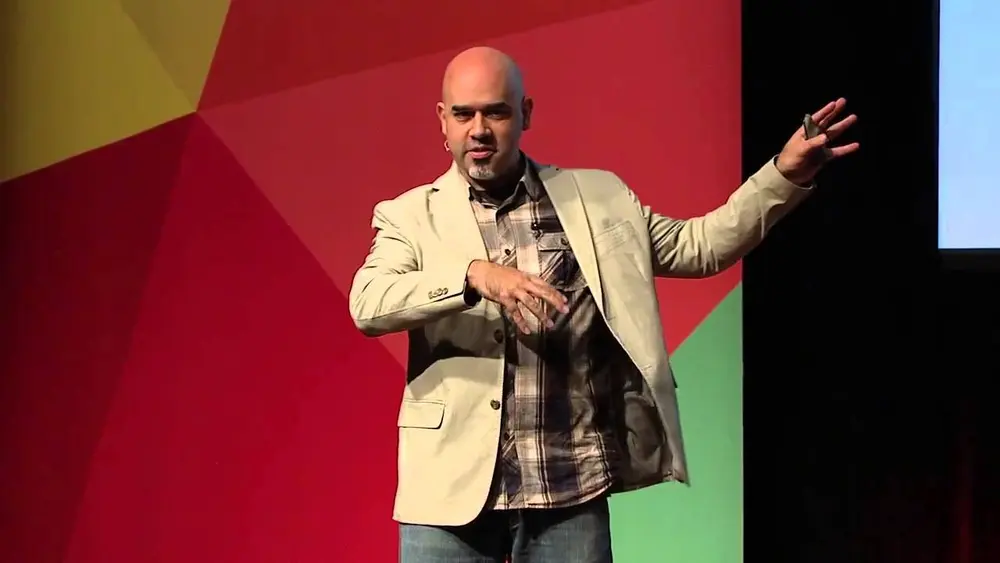
Behavior Change as Value Proposition

Conference talk at UX Week
· 29 min
Design that supports behavior change is getting more attention as technology lets products and services play a more pervasive role in people’s lives. In this talk from UX Week 2013, Chris Risdon, head of design for Capital One Labs and previously a design director at Adaptive Path, asks what impact passively collected data, presented back in a meaningful way, has on people.
Smart products with personalized intelligence about our behavior track things like how often we brush our teeth or walk the dog, in the hope that we’ll keep up those habits. Chris looks at where these offerings fit in the landscape of products and services, what impact data has on behavior, and how data visualizations amplify persuasion.
He also raises a tension: as more products explicitly influence our daily lives, they increasingly ask us to give up some self-determination as a condition of use. The talk asks how to design for behavior change as a value proposition. Related ideas such as self-monitoring and feedback loops are covered in the UI-Patterns.com persuasive pattern library.
What you'll learn
- Why design for behavior change is getting more attention
- How passively collected data, presented back meaningfully, affects people
- How data visualizations can amplify persuasion and influence behavior
- The trade-off between product influence and users' self-determination

Watch next
-
Dan SafferMicrointeractions
-
Anders ToxboeBeyond usability: Designing with persuasive patterns




More from Chris Risdon
-
Chris RisdonOrchestrating Touchpoints

Free email course
Build Persuasive Products
A free lesson each week on using psychology to design more engaging interactions. Learn at your own pace.
Start the free course