How to Build Habit-Forming Products
Conference talk at Startup Grind
· 22 min
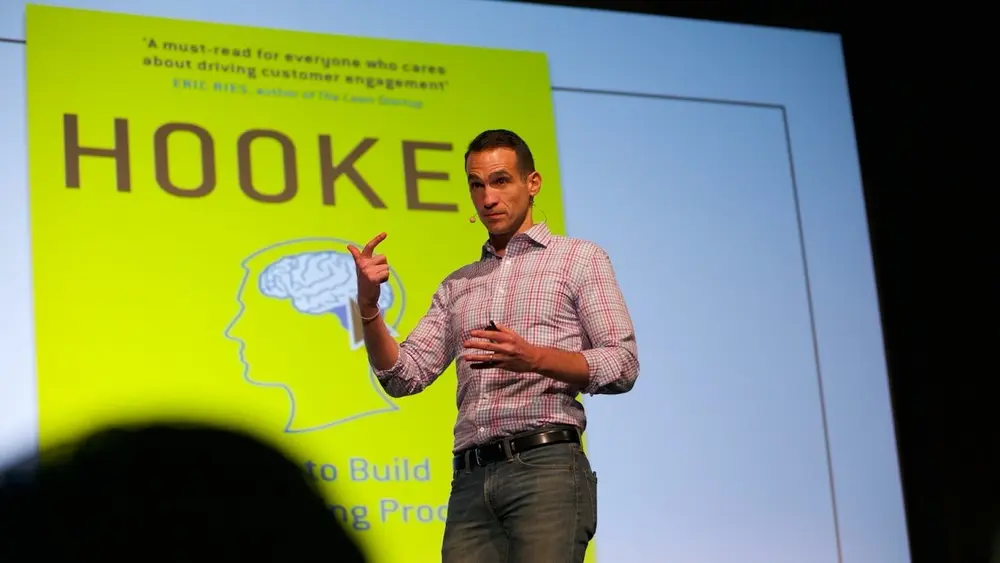
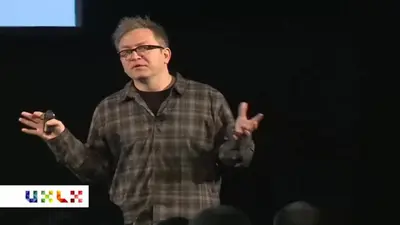
In this 2017 talk, Nir Eyal describes the Hook Model, a four-phase pattern found in habit-forming technologies. He invites viewers to think about the habit-forming products in their own lives and ask whether they can find the hooks in the products they use most, and in the product or service they are building.
The most engaging products share a basic design pattern called a hook: an experience that connects a user’s problem to a company’s solution often enough to form a habit. Hooks appear in all sorts of products we use with little conscious thought. Over time, customers form associations that spark unprompted engagement. They move from needing external triggers, such as ads and calls to action, to self-triggering through internal triggers. Use of the product is typically associated with an emotional pain point, an existing routine or a situation.
A hook starts with a trigger, then an action, then a reward, and finally an investment. Through successive cycles, user habits are formed. Triggers, variable rewards and investment loops each have their own entry in the UI-Patterns.com persuasive pattern library.
What you'll learn
- What the four phases of the Hook Model are
- How hooks connect users' problems to a company's solution often enough to form habits
- How users move from external triggers to internal triggers
- Why product use is tied to emotional pain points, routines or situations

Watch next
-
Anders ToxboeBeyond usability: Designing with persuasive patterns
-
Dan SafferMicrointeractions
-
Harry BrignullDark Patterns: User Interfaces Designed to Trick People


Free weekly newsletter
Real UI patterns and design psychology in your inbox
Learn how successful products use UI patterns and behavioral design. One email a week from UI-Patterns.com and Learning Loop.
Subscribe