5 Psychological Principles of Persuasive Product Design

Conference talk at Mind the Product
· 27 min
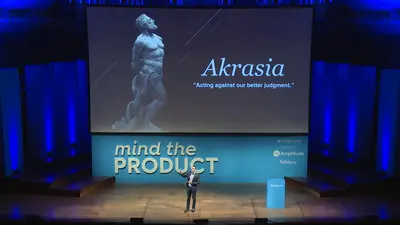
To design persuasive products, you have to understand the psychological triggers, biases and motivations that drive your customers. In this talk from Mind the Product 2015, web psychologist Nathalie Nahai, author of Webs of Influence, goes through five of the most important psychological principles behind persuasive design online.
She covers the sunk cost fallacy: you are more likely to carry on with something once you have invested time in it, even if you would be better off abandoning it. She explains how compelling cycles of variable reward create dopamine spikes in user journeys, much like rolling a die when you don’t know whether you will get something good. Because people become desensitised over time, products need to add novelty frequently. And creating an appointment dynamic builds habitual patterns of use.
Each of these principles, from the sunk cost effect to variable rewards and appointment dynamics, has its own entry in the UI-Patterns.com persuasive pattern library.
What you'll learn
- How the sunk cost fallacy keeps people going once they have invested time
- How cycles of variable reward create dopamine spikes in user journeys
- Why people become desensitised and products need regular novelty
- How an appointment dynamic builds habitual patterns of use

Watch next
-
Nathalie NahaiHow to use psychology to make people click
-
Nathalie NahaiEmpathy: your secret weapon in designing for the web
-
Dan SafferMicrointeractions
-
Anders ToxboeBeyond usability: Designing with persuasive patterns




Free email course
Build Persuasive Products
A free lesson each week on using psychology to design more engaging interactions. Learn at your own pace.
Start the free course