
Design Principles: The Philosophy of UX
Conference talk at Ignite
· 5 min
The visual principles of harmony, unity, contrast, emphasis, variety, balance, proportion, repetition, texture and movement are widely recognized and practised, even when they aren’t formally articulated. But creating a good design doesn’t automatically mean creating a good experience.
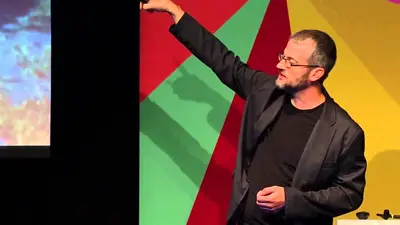
In this 2011 talk, Whitney Hess, a coach, writer and speaker, argues that to create positive experiences for users we need a set of guiding principles for experience design. Guiding principles are the broad philosophy or fundamental beliefs that steer the decisions of an organization, team or individual, regardless of project goals, constraints or resources.
Whitney shares a universally applicable set of experience design principles that everyone should strive to follow, and explores how you can create and use your own guiding principles to improve your site or product.
What you'll learn
- Why good visual design doesn't automatically create a good experience
- What guiding principles are and how they steer decision making
- A universally applicable set of experience design principles
- How to create and use your own guiding principles

Watch next
-
Amy Jo KimThe Player's Journey
-
Benjamin De CockMotion & Playfulness
-
Peter MorvilleThe Architecture of Understanding



Free weekly newsletter
Real UI patterns and design psychology in your inbox
Learn how successful products use UI patterns and behavioral design. One email a week from UI-Patterns.com and Learning Loop.
Subscribe