Data Import
Design Pattern

Alternate titles: Import Tool, Data Migration, Bring Your Data.
Problem summary
Users switching from another tool face an empty product, and the effort of recreating their work is a strong reason to stay where they are.
Example
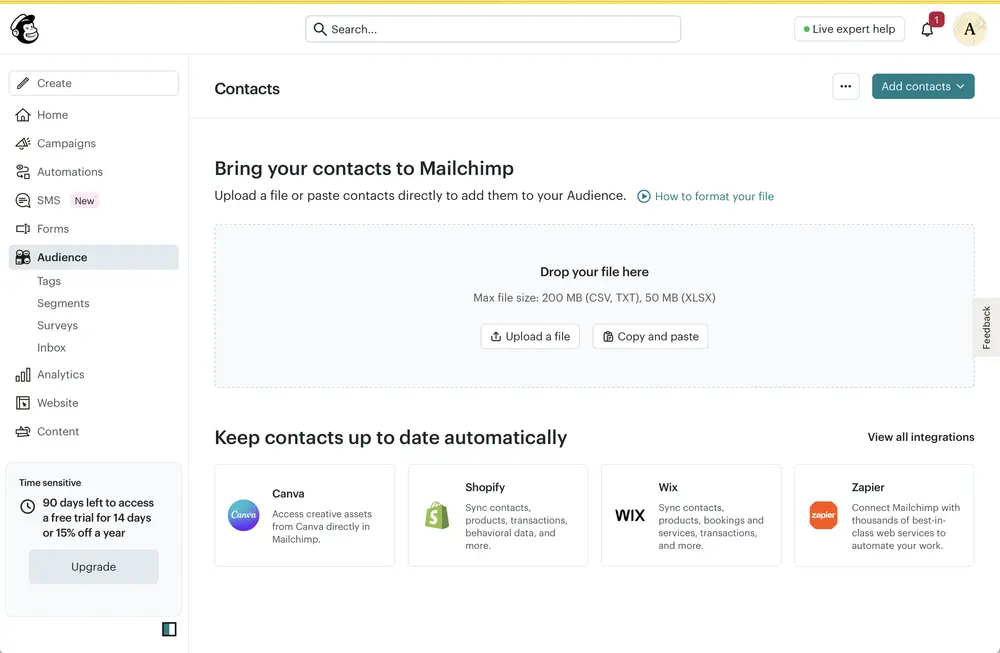
▲ Mailchimp’s Contacts page offers to upload a file (CSV, TXT or XLSX) by dropping it or by button, or to copy and paste. Below it, integrations offer to keep contacts up to date automatically.
Usage
- Use when your users typically switch from spreadsheets or a competing product.
- Use when the product’s value depends on the user’s own data.
- Do not use when imports are so complex that a broken import would damage trust. Start with a guided manual path instead.
The card deck
Find more patterns like Data Import in the UI Patterns card deck
A collection of 60 User Interface design patterns, presented in a manner easily referenced and used as a brainstorming tool.
Solution
Offer import as a first-class starting point, alongside starting from scratch or from a template.
Support the sources users come from
Accept the formats and tools your users actually use, such as CSV and Excel files and the leading competitors. Let them drop a file, pick one, or paste the data in.
Ask where the data comes from
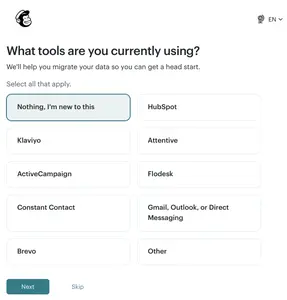
A question during setup (“What tools are you currently using?”) lets the product offer the right import path, and signals that migration is expected.
Preview before committing
Show how the imported items will look before the import runs. Map fields automatically where possible, and let users fix mappings.
Handle size and failure well
Run large imports in the background and tell the user when they finish. Report clearly what was imported, what was skipped, and why. Make imports reversible.
Keep the data up to date
If the user will keep working in the other tool, offer an integration that syncs the data instead of a one-time import.
Rationale
Import removes the largest part of the switching cost and fills the product with material the user cares about. That makes first value both faster and more relevant, because the user sees their own work in the new tool.
Discussion
Silent failures
Partial imports that fail without saying so do more harm than no import. Show a summary of what happened, and give users a way to retry the items that failed.
Import versus sync
An import copies data once. A connected account keeps two systems in step. Make clear to users which one they are choosing, and what happens to the data in each place afterward.
Measuring it
Track import completion rate, error rate, and the activation of importing users compared with users who start empty.
More examples of the Data Import pattern