Product Development Tools

Conference talk at Mind the Product
· 30 min
Most products follow the same pattern. They start with an a-ha moment: you come up with an idea and sketch it out quickly. Then the product becomes incredibly complex, and you are dealing with bugs, different mobile experiences and all the other details of a fully fledged product.
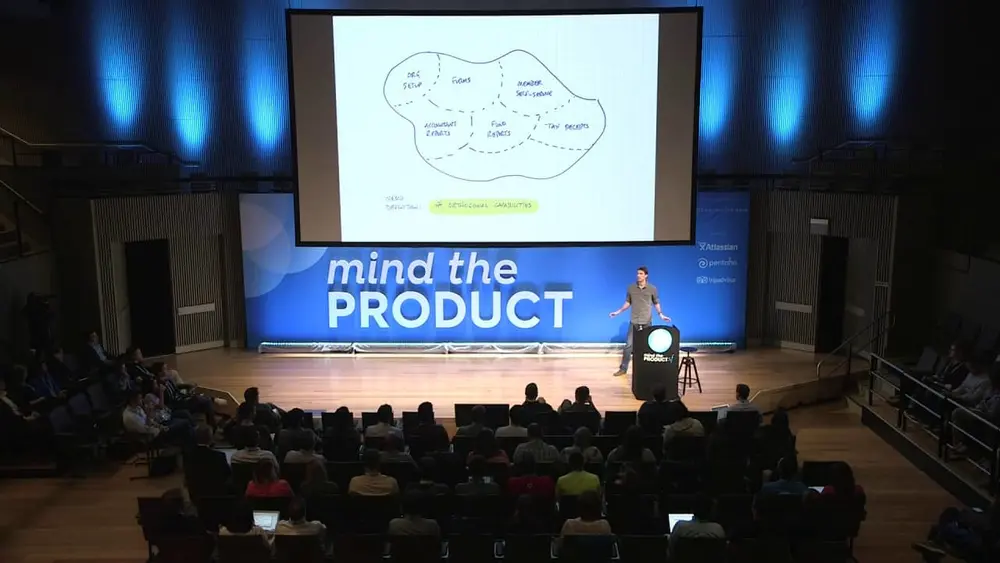
In this talk at Mind the Product in 2015, Ryan Singer, who designs interfaces and manages product teams at Basecamp (formerly 37signals), says the key is to identify the capabilities a product needs that are orthogonal to each other. If you can separate one thing from another and work on it, you reach a state called done, and you can check capabilities off one after another.
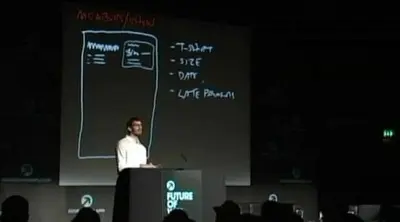
Singer then breaks each capability into the component pieces needed to design, build and deliver it, which becomes that capability’s to-do list. This gives clear visibility of the whole project: instead of piecemeal work, you see exactly what’s done and what’s not at any stage. He demonstrates the method by drawing out an example project live on stage.
What you'll learn
- Why products quickly become complex after the initial a-ha moment
- Identifying capabilities that are orthogonal to each other
- Breaking capabilities into pieces that form their to-do list
- Getting a clear picture of what's done and what's not

Watch next
-
Mina RadhakrishnanThe Art of Saying No
-
Paul AdamsDon't Join the Cult
-
Christina WodtkeIdeas are cheap. Execution is everything.
-
Jared SpoolThe Anatomy of a Design Decision

More from Ryan Singer
-
Ryan SingerA Tour of the Design Process at 37signals
Free weekly newsletter
Real UI patterns and design psychology in your inbox
Learn how successful products use UI patterns and behavioral design. One email a week from UI-Patterns.com and Learning Loop.
Subscribe